






Exercise Interventions to Improve Body Composition

Guest writer: Rob van Berkel, Research dietitian and writer on nutrition and health
Exercise Interventions to Improve Body Composition
Exercise interventions aimed at improving body composition focus on increasing muscle mass, reducing fat mass, improving fat distribution, and stimulating bone density. This approach not only helps improve overall health but also contributes to promoting a vital and active life.
Increasing Muscle Mass
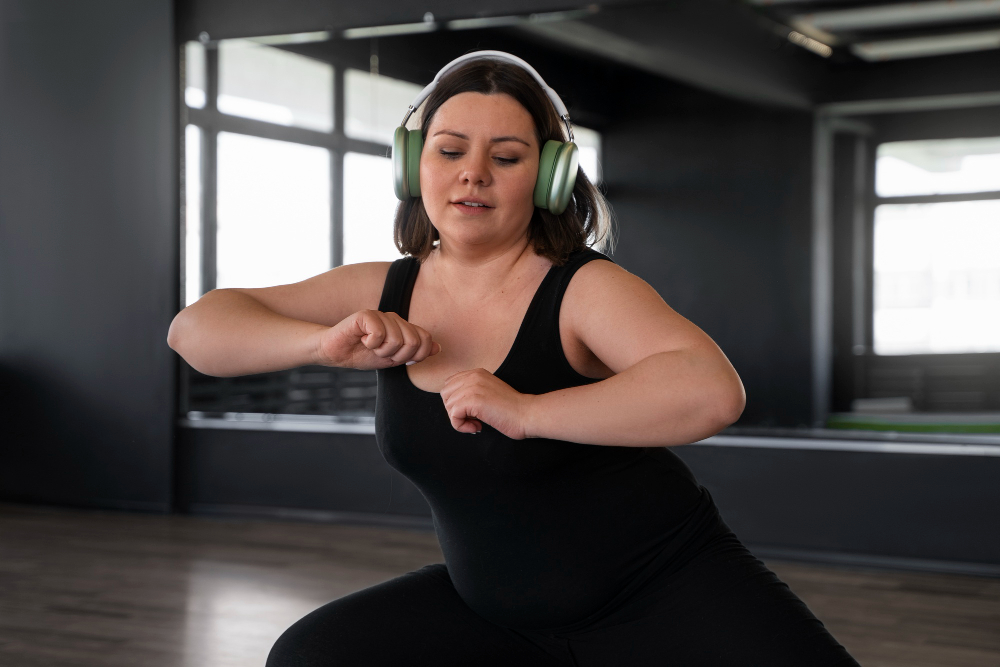
To build muscle mass, or to limit its loss, it is necessary to progressively load the muscles and allow sufficient rest for recovery. This stimulates muscle protein synthesis and ensures a positive balance between muscle breakdown and muscle growth (Booth et al., 1991). Resistance training is particularly suitable for this purpose, including in individuals with obesity when combined with an energy-restricted diet (Lopez et al., 2022; Binmahfoz et al., 2025).
Resistance may consist of:
-
Free weights: barbells, dumbbells, kettlebells
-
Machines: strength equipment such as a leg press or chest press
-
Body weight: push-ups, squats, pull-ups
-
Resistance bands: elastic bands with varying resistance levels
Reducing Fat Mass
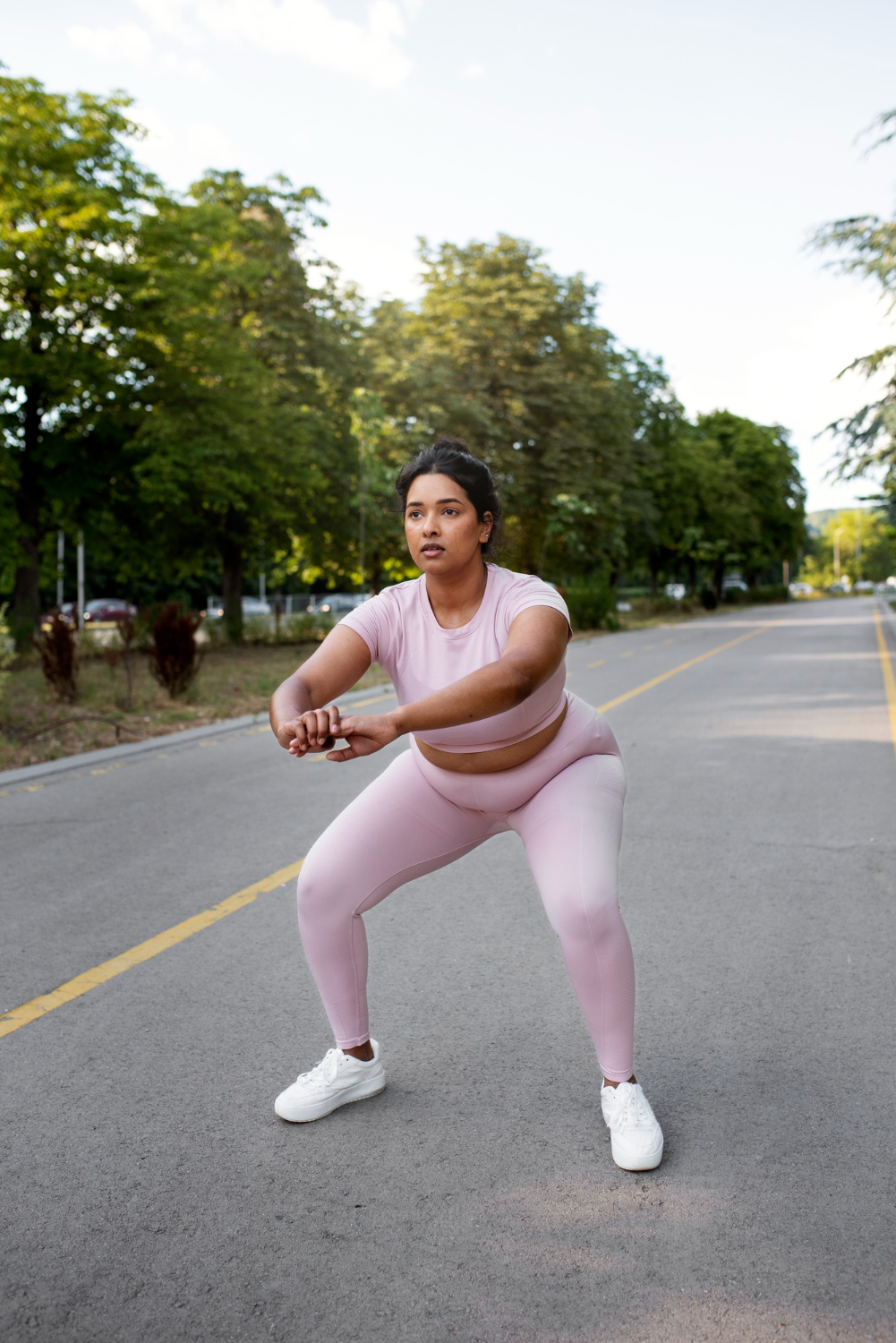
Reducing fat mass requires a sustained negative energy balance. Energy expenditure must exceed energy intake, causing energy reserves (fat mass) to be used. An energy-restricted diet is the most appropriate strategy for this purpose, but physical activity can also help and provide support. Cardiovascular training has a greater effect than resistance training (Lafontant et al., 2025).
Examples of cardiovascular training include:
-
Running
-
Cycling
-
Walking
-
Swimming
-
Rowing
-
Dancing
-
Jump rope
-
Crosstrainer/elliptical training
Improving Fat Distribution
Improving fat distribution often refers to reducing fat mass in the abdominal cavity. This fat surrounds vital organs, and excessive amounts are associated with various health problems (Stefan et al., 2020). Physical activity can reduce visceral fat mass, particularly High-Intensity Interval Training (HIIT) and cardiovascular training (Chen et al., 2024). One explanation is that visceral fat has a higher density and sensitivity of beta-adrenergic receptors, which stimulate fat breakdown during cardiovascular exertion (Lönnqvist et al., 1995).
Improving Bone Density
Just as muscles must be loaded to build muscle mass, bones must be loaded to improve bone density or slow its decline (Ng et al., 2023). Walking is more effective than cycling, and jump rope is more effective than swimming. Women, particularly after menopause, often experience weaker bones (osteoporosis) because bone density decreases due to declining estrogen levels. Most research on exercise and bone density has therefore been conducted in this group. Findings show that a combination of cardiovascular and resistance training is most effective in counteracting bone density loss (Xiaoya et al., 2025).
Conclusion
Body composition has a major impact on health and quality of life. Different forms of exercise have different effects on various aspects of body composition. Overall, a combination of cardiovascular and resistance training appears to be most effective, but choices can be tailored depending on the client. A personal trainer or physiotherapist can provide guidance. Most importantly, any form of movement is better than no movement.
References
Binmahfoz A, Dighriri A, Gray C, Gray SR. Effect of resistance exercise on body composition, muscle strength and cardiometabolic health during dietary weight loss in people living with overweight or obesity: a systematic review and meta-analysis. BMJ Open Sport Exerc Med. 2025;11(3):e002363. Published 2025 Sep 2.
Booth FW, Thomason DB. Molecular and cellular adaptation of muscle in response to exercise: perspectives of various models. Physiol Rev. 1991;71(2):541-585.
Chen X, He H, Xie K, Zhang L, Cao C. Effects of various exercise types on visceral adipose tissue in individuals with overweight and obesity: A systematic review and network meta-analysis of 84 randomized controlled trials. Obes Rev. 2024;25(3):e13666.
Lafontant K, Rukstela A, Hanson A, et al. Comparison of concurrent, resistance, or aerobic training on body fat loss: a systematic review and meta-analysis. J Int Soc Sports Nutr. 2025;22(1):2507949.
Lönnqvist F, Thöme A, Nilsell K, Hoffstedt J, Arner P. A pathogenic role of visceral fat beta 3-adrenoceptors in obesity. J Clin Invest. 1995;95(3):1109-1116.
Lopez P, Taaffe DR, Galvão DA, et al. Resistance training effectiveness on body composition and body weight outcomes in individuals with overweight and obesity across the lifespan: A systematic review and meta-analysis. Obes Rev. 2022;23(5):e13428.
Nakamura M, Tanaka M, Abe S, toh K, Imai K, Masuda T, Nakao H. Association between beta 3-adrenergic receptor polymorphism and a lower reduction in the ratio of visceral fat to subcutaneous fat area during weight loss in Japanese obese women. Nutrition Research, Volume 20, Issue 1, January 2000, Pages 25-34.
Ng CA, Gandham A, Mesinovic J, Owen PJ, Ebeling PR, Scott D. Effects of Moderate- to High-Impact Exercise Training on Bone Structure Across the Lifespan: A Systematic Review and Meta-Analysis of Randomized Controlled Trials. J Bone Miner Res. 2023;38(11):1612-1634.
Stefan N. Causes, consequences, and treatment of metabolically unhealthy fat distribution. Lancet Diabetes Endocrinol. 2020;8(7):616-627.
Xiaoya L, Junpeng Z, Li X, Haoyang Z, Xueying F, Yu W. Effect of different types of exercise on bone mineral density in postmenopausal women: a systematic review and network meta-analysis. Sci Rep. 2025;15(1):11740. Published 2025 Apr 5.
Would you like to know more about the professional body composition monitors? Then visit this page.


