






BIA monitor: a good business model?

Author: Berdien van Wezel, Owner of Gezond Leven Diëtisten
BIA monitor: a good business model?
In healthcare we are averse to entrepreneurship. No, averse to working commercially. But what is commercial? “That you act and think from the client’s perspective,” that is one of the definitions. As a care provider I feel particularly comfortable with this.
Performing a body analysis is, for me, a business model with which I truly help the patient! As if I now run a specialty shop, while there is not yet a single supermarket with a BIA monitor.
Dietitians receive referrals from all sides: for example via general practitioners, physician assistants, specialists, etc. This can concern all kinds of conditions, for example food allergy, malnutrition or obesity. Very often, performing a body analysis measurement is a standard part of the consultation in order to obtain a complete picture of the patient’s body composition.
What does a dietitian do?
Some weeks ago I was asked to give a five-minute talk for 150 GPs and physician assistants. The organization asked me to tell them what a dietitian does. Well, my jaw dropped. Who doesn’t know what a dietitian does? I was very surprised that I had to tell this. When I wrote the talk I realized that many elements that are woven into our work are unknown to people.
And I’m not talking about building a relationship of trust with the patient, but about:
-
Checking whether medications used affect appetite
-
Checking for an eating disorder by means of various questionnaires
-
Checking for underweight using growth charts
-
Checking whether it is possible to add more kcal to the daily menu
-
Doing a BMI measurement
Measuring is knowing
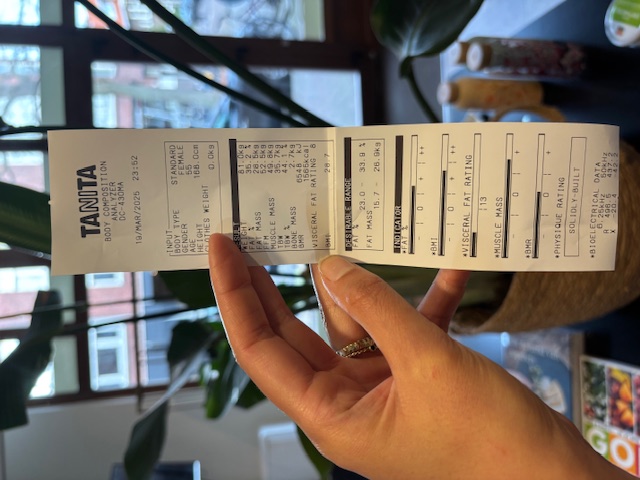
That carrying out a BIA measurement is standardly woven into various protocols and is included as part of the secondary outcome measures in the guideline “Overweight and Obesity in Adults and Children” is also often completely new to all the GPs and physician assistants I tell this to. I explain to them that weight alone says nothing. They understand that, but the fact that the dietitian also determines fat %, fluid % and muscle mass is entirely new to them. That we interpret the measurement and instruct the patient on how they can improve their dietary intake and physical activities.
By measuring, the patient gains insight into weight, fat percentage and muscle mass. That in itself is already a breakthrough because I often experience that patients estimate their muscle mass much lower than it actually is. At the follow-up consultations, the patient often wants to step on the scale straight away to see what progress has been made again. This increases the motivation to continue following the new eating habits strictly. It also gives me energy; how wonderful is it to work with satisfied patients?
Geertien, physician assistant:
“How nice that dietitians perform this measurement. As a physician assistant I don’t have time to do this as well.”
Would you like to know more about the professional body composition monitors? Then visit this page.


